Free packAges 5-6, KTracing
Number Tracing 1-20
The full 24-page number-tracing practice book — free with email.
How to use this
What it builds
Writing a numeral correctly is a separate skill from counting or recognizing it printed — a child can count to twenty perfectly while still forming a wobbly, backwards, or inconsistent '7' or '2' by hand. This 24-page book gives each number its own dedicated page with room to trace the numeral repeatedly, the way the alphabet tracing books do for letters, rather than treating numeral formation as something that will just sort itself out alongside counting practice. Going all the way to 20, not stopping at 10, matters because teen numbers (11–19) introduce a specific new confusion — the two-digit shape, and the backwards-sounding 'teen' names for 13 and 15 in particular — that a book stopping at 10 never gives a child a chance to practice. A finished 24-page binder also works as a simple record for a teacher or parent to flip through at a glance, spotting which specific numbers still need another pass without re-testing the whole range from scratch.
Ready when
A child who can already count out loud to ten or so and hold a pencil with some control is ready. They do not need to write numerals correctly yet — that's exactly the skill this book builds — just enough pencil control to trace a guided shape. There's no need to already recognize every numeral before starting — recognizing the shape well enough to copy it while an adult says the number aloud is enough to begin.
How to run it
Print the pages you need, or the full 24-page book. One number a day keeps each session under five minutes; count out loud to that number before tracing it, so the numeral and the count stay linked rather than becoming two separate memorized facts. Slow down through 11–20, where reversals and stroke-order mistakes are far more common than in the single digits. Free for classroom use — a full class set supports a number-of-the-day routine through the school year. The single-page quick sheet in the same library is a faster way to sample where a child stands before committing to the full book. Some children breeze through 1–10 and then need real extra time on 11–20; it's fine to spend two or three days on a single tricky teen number rather than moving on at the same one-a-day pace that worked for the single digits. A completed 24-page binder is also a genuinely useful thing to send to a new teacher at the start of a school year, since it shows exactly where numeral formation stood at a specific point in time.
More like this
- Free
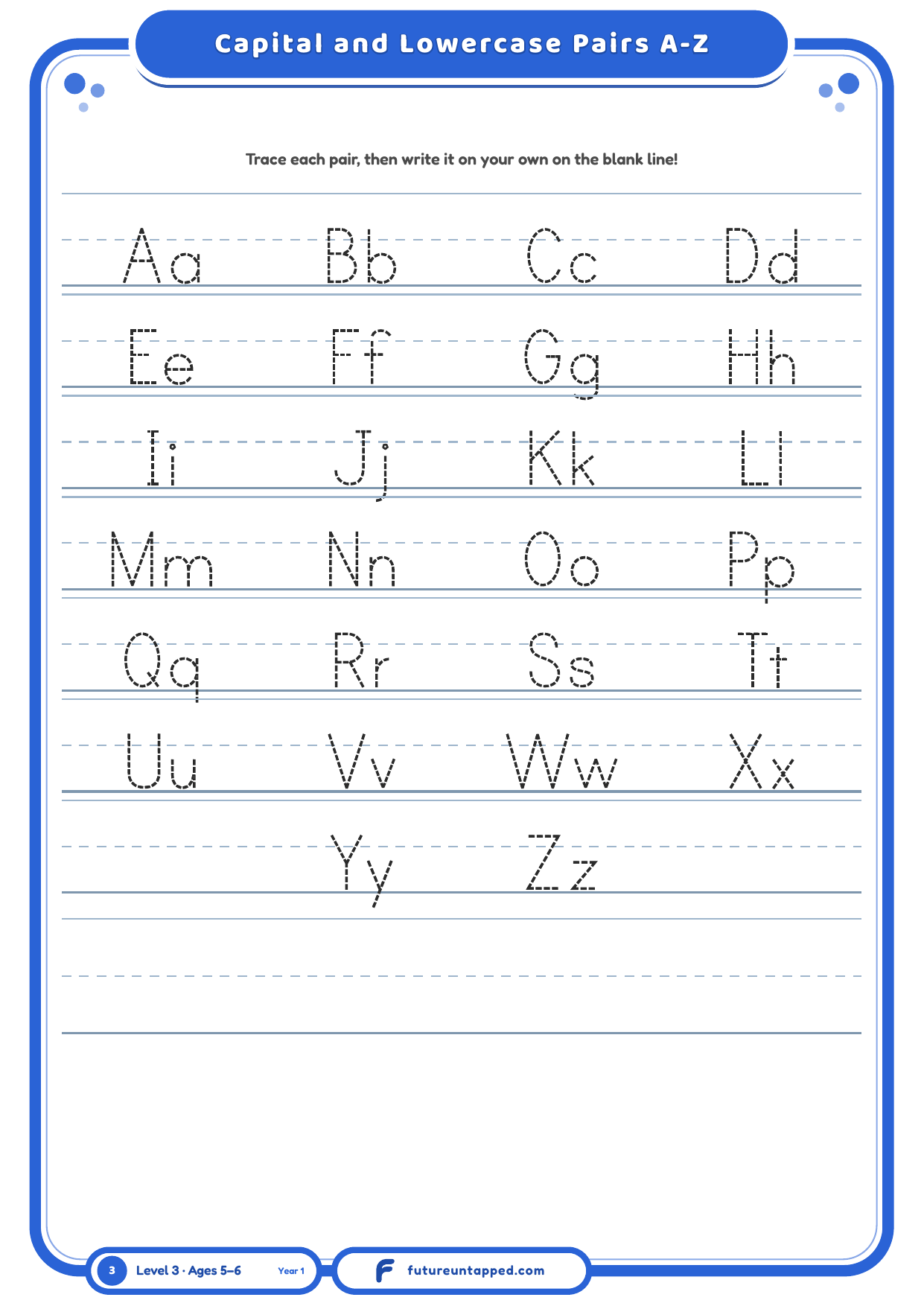
Alphabet Tracing A-Z Quick Sheet (Capital and Lowercase Pairs)
Ages 5-6, KTracingLetter and A4
- Free
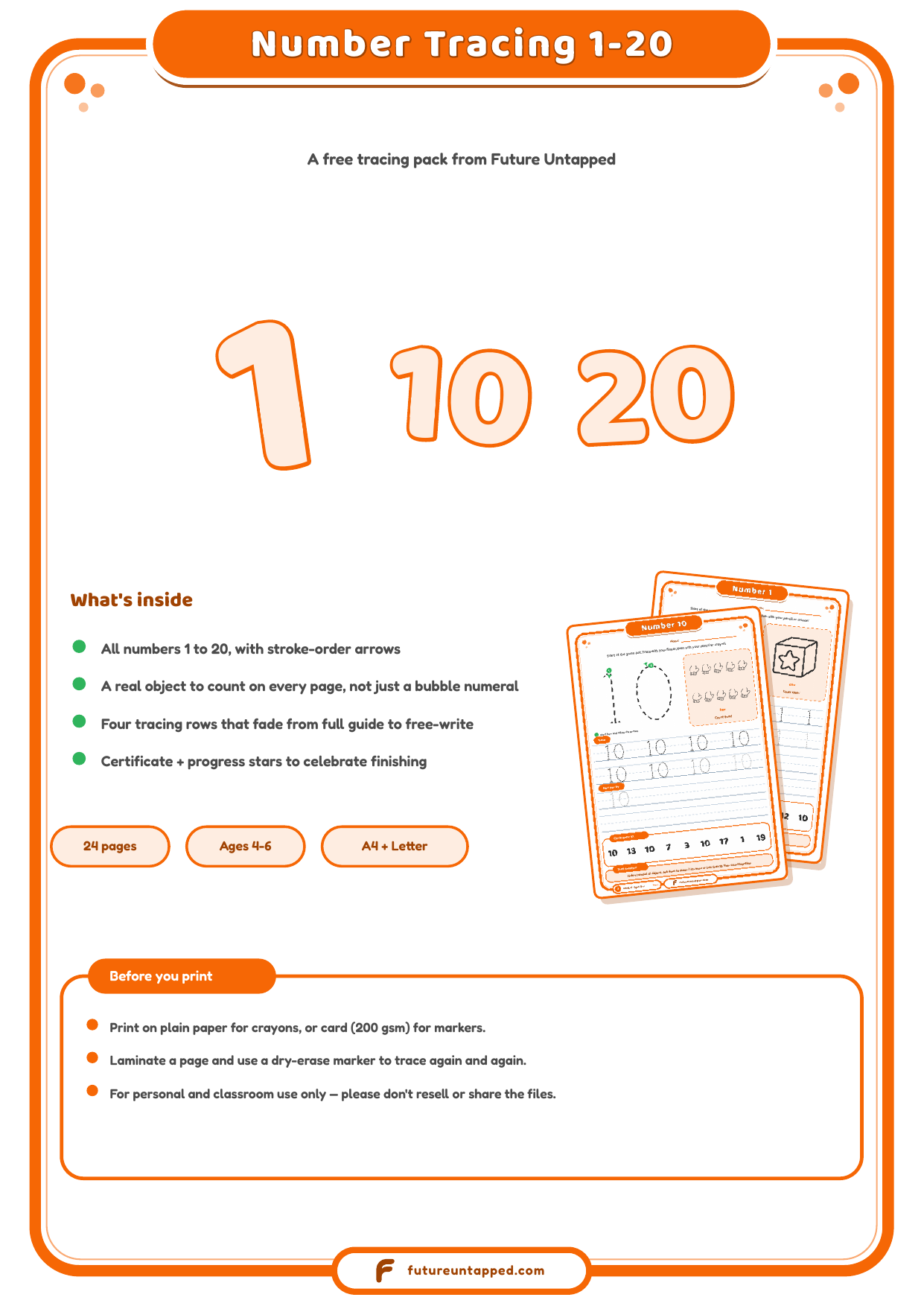
Number Tracing 1-20 Quick Sheet
Ages 5-6, KTracingLetter and A4
- Free with email
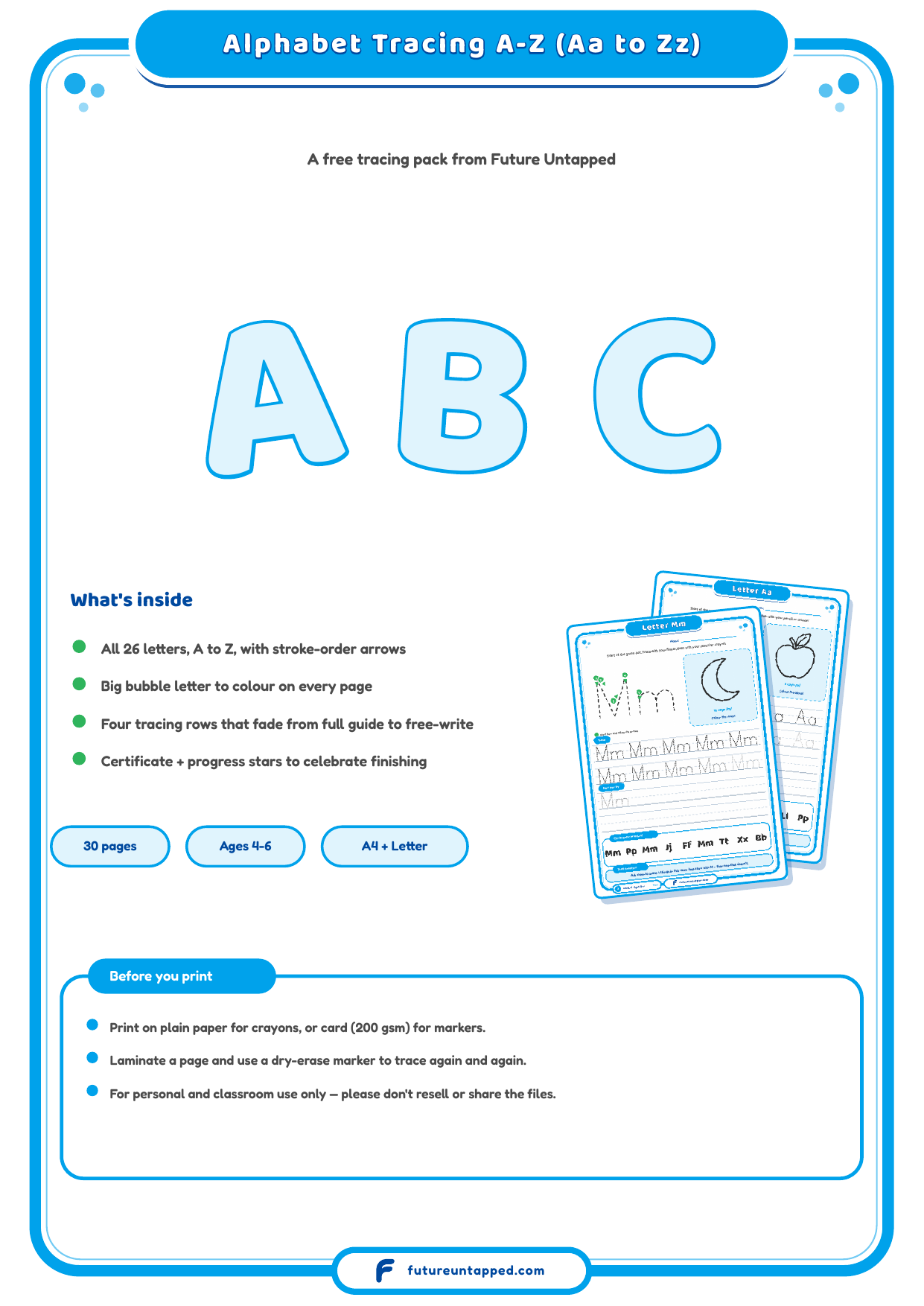
Alphabet Tracing A-Z (Aa to Zz)
Ages 5-6, KTracing30 pages, Letter and A4
- Free with email
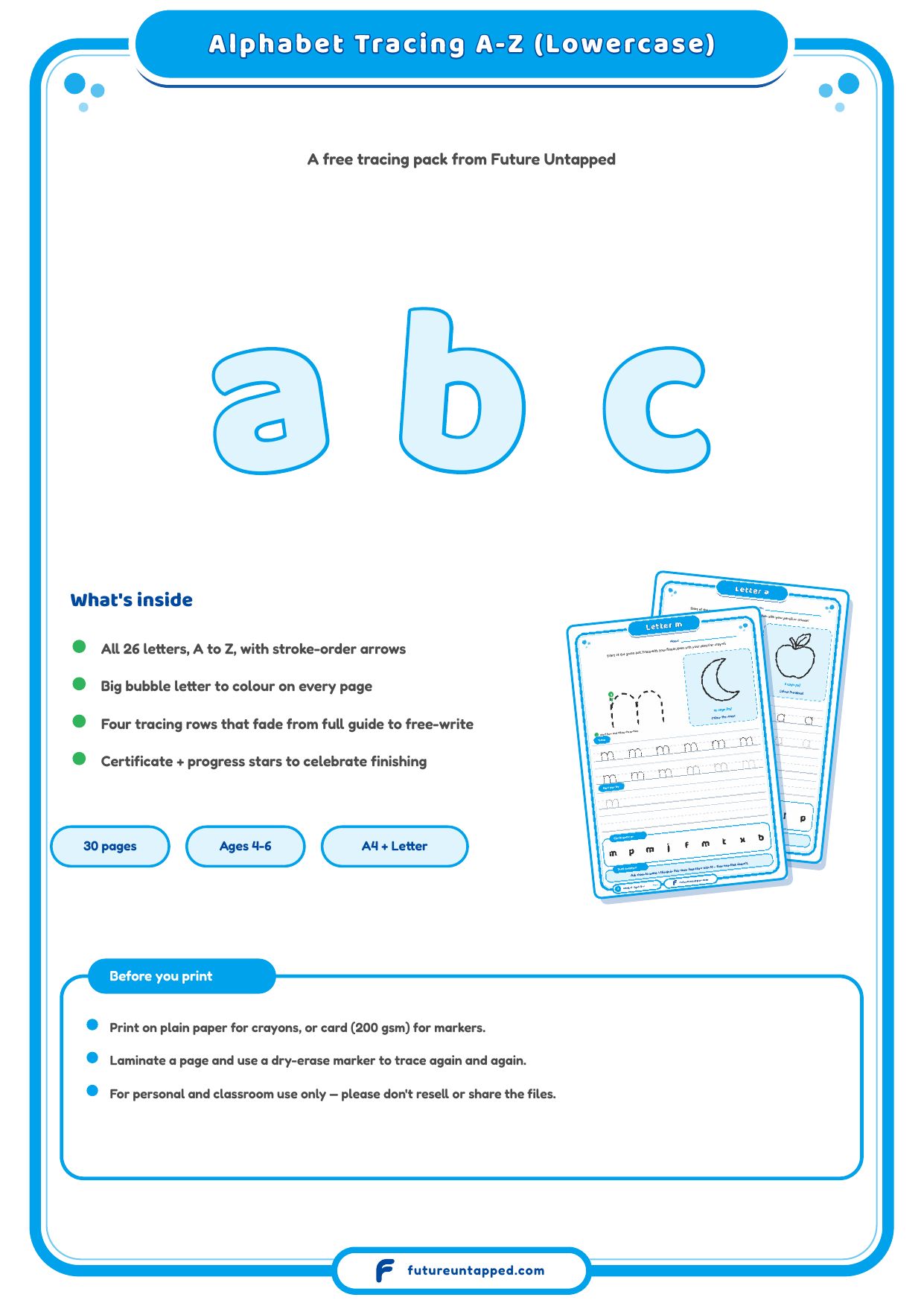
Alphabet Tracing A-Z (Lowercase)
Ages 5-6, KTracing30 pages, Letter and A4


