Free packAges 5-6, KTracing
Alphabet Tracing A-Z (Lowercase)
The full 30-page lowercase-letters practice book — free with email.
How to use this
What it builds
Lowercase letters are the harder half of the alphabet to learn, and this 30-page book treats them that way rather than rushing them. Where capitals are mostly simple vertical-and-diagonal strokes, lowercase introduces ascenders (b, d, l), descenders (g, p, y), and a lot more roundness — and it's also the case a child will actually read and write far more often once they start school, since most printed and handwritten text outside of headings is lowercase. Letters that are easy to reverse (b/d, p/q) get no special treatment or shortcut here deliberately: the repetition of tracing the correct form, letter by letter, is what settles the reversal issue for most children faster than any mnemonic trick does. One page per letter keeps each practice session focused on a single shape rather than blending several new forms together. Because most storybooks, cereal boxes, and street signs a child reads day to day are printed in lowercase, this book's 26 pages double as practice for the letterforms a child will actually meet most often outside of headlines and their own name in block capitals.
Ready when
Comfortable with capital-letter tracing already, or at least confident holding a pencil with some control. This book suits a child who already recognizes their capital letters and is ready for the harder, more varied lowercase shapes — starting here before capitals feel solid usually means more frustration than progress. There's no need to finish the capital book perfectly before starting this one — a child who's mostly comfortable with capitals, even with one or two still shaky, is ready to begin.
How to run it
Print the pages you need, or the full book. Say the letter's sound as well as its name while tracing — lowercase is where sound-letter correspondence starts mattering for early reading, more than it did with capitals. Go slowly on b/d and p/q; if a reversal keeps happening, trace that one letter a few extra times over a few days rather than correcting it once and moving on. Free for classroom use — a full class set supports a letter-of-the-week rotation through kindergarten. Once lowercase feels comfortable, the combined Aa–Zz pack is the natural next step, since it asks a child to hold both forms of the same letter in mind on one page instead of practicing them as separate books. Some children find it easier to trace a letter's lowercase form right after tracing its capital from the earlier book on the same day, rather than working through all 26 lowercase letters cold in one sitting — either order works, so follow whichever keeps the child engaged.
More like this
- Free
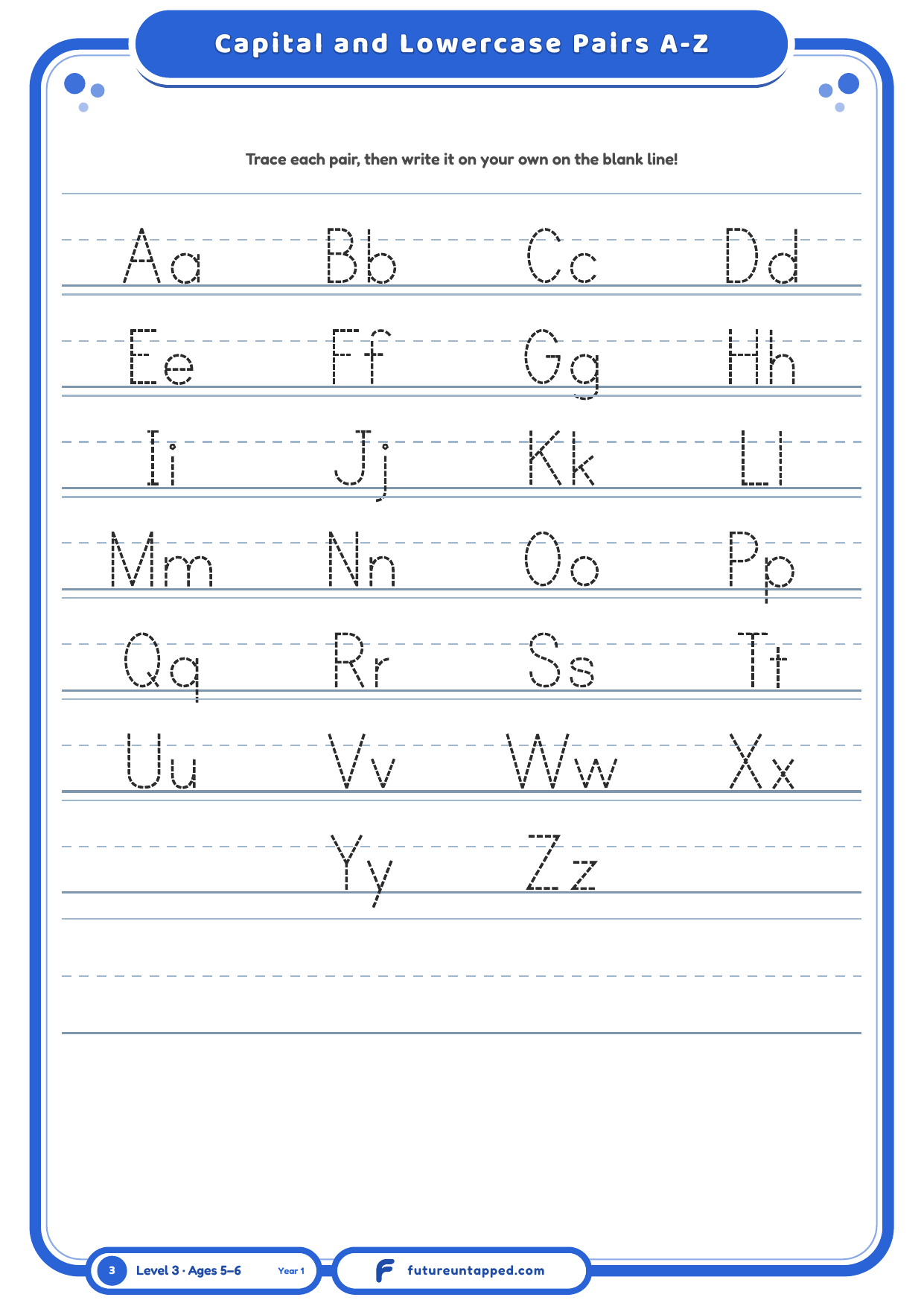
Alphabet Tracing A-Z Quick Sheet (Capital and Lowercase Pairs)
Ages 5-6, KTracingLetter and A4
- Free with email
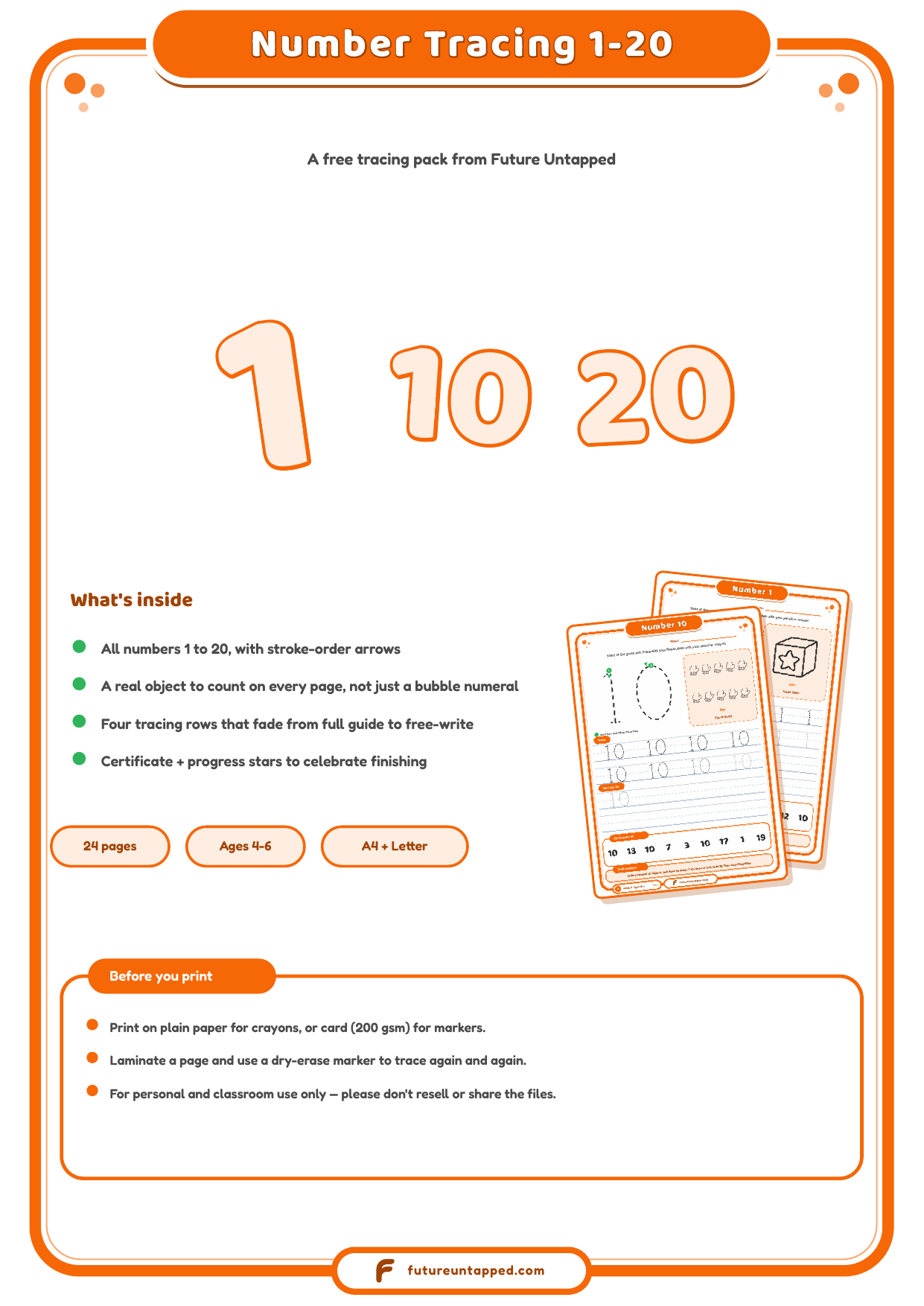
Number Tracing 1-20
Ages 5-6, KTracing24 pages, Letter and A4
- Free
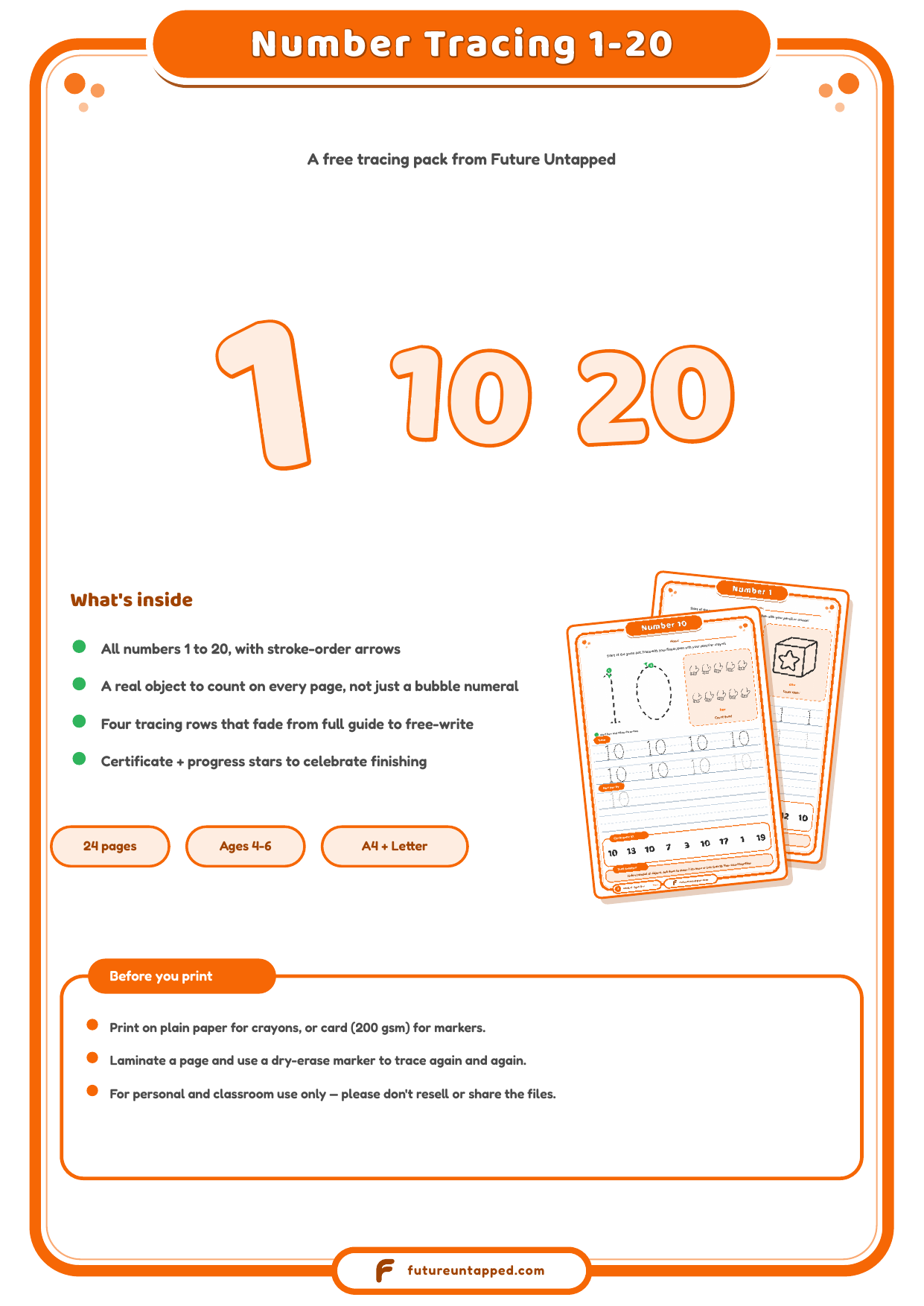
Number Tracing 1-20 Quick Sheet
Ages 5-6, KTracingLetter and A4
- Free with email
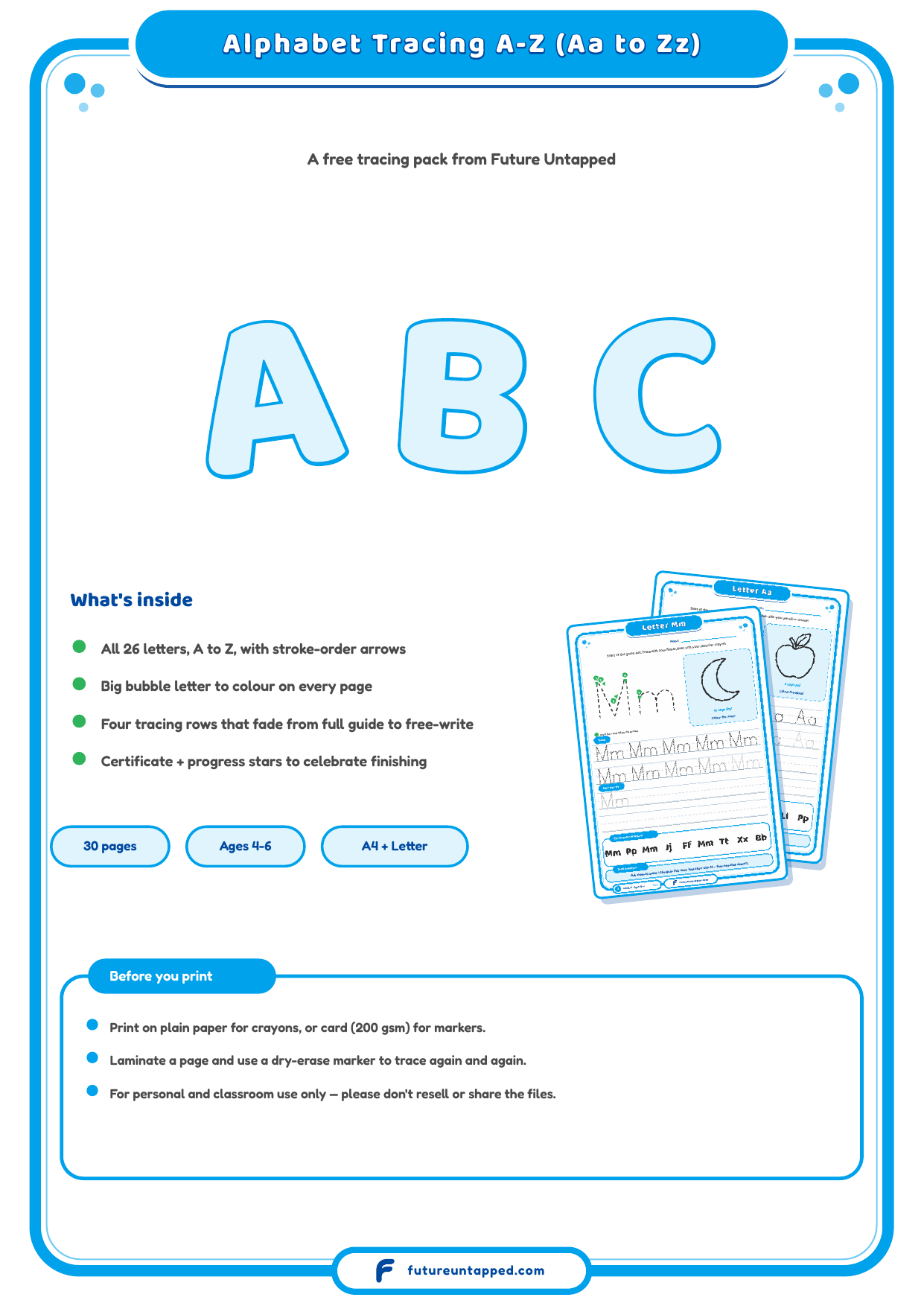
Alphabet Tracing A-Z (Aa to Zz)
Ages 5-6, KTracing30 pages, Letter and A4


