Free printableAges 5-6, KAddition
Make Ten Addition Quick Sheet
One free page: find pairs that make ten — a kindergarten number-bond classic.
Step 3 of 3 on the addition path
Print & download
Make Ten Addition Quick Sheet (1 page)
Free to print and use at home or in the classroom, as many times as you like.
How to use this
What it builds
Make ten is a number-bonds page, not a counting page — every one of the eight rows sums to exactly ten, and the sequence is deliberately ordered so the left group climbs by one (1, 2, 3…8) while the right group falls by one (9, 8, 7…2) on the very next row. That pattern is the point: Common Core K.OA.4 asks children to find the number that pairs with a given number to make ten, and seeing the eight pairs laid out in order — rather than shuffled — makes the seesaw relationship visible instead of something to memorize as eight unrelated facts. Number bonds to ten are the single most-used mental-math fact family in early arithmetic, underpinning later strategies like 'make ten to add 8+5' that first- and second-grade teachers rely on, so a page that shows the pattern rather than just testing it earns its place ahead of plain addition drills. The middle row, 5+5, sits at the exact turning point where the left group stops being the smaller side and starts being the larger one, which is worth pointing out on its own as the page's midpoint.
Ready when
This is the hardest of the three addition quick sheets — a child should already add confidently within 10 before starting here. They do not need to know the term 'number bond'; noticing 'the dots on this side went up and the other side went down' is the whole insight this page is built to surface. Most children meet this pattern around kindergarten or the start of Year 1, once plain within-10 sums no longer need much effort.
How to run it
Print one copy. Work the first two rows together, counting both groups aloud, then ask 'what do you notice about the numbers as we go down the page?' before letting them finish the rest alone. That one question is what turns a worksheet into a pattern discovery instead of eight separate sums. Five to ten minutes covers the page. Follow with a quick number talk — 'if 6 and 4 make ten, what makes ten with 7?' — using the page as the reference. Suits a kindergarten or Year 1 number-bonds lesson as a follow-up to the plain within-10 sheet, not a replacement for it. Fingers work well as a backup: ten fingers held up, fold down the left number, and count what's left standing — that physical model makes the seesaw pattern concrete for a child who isn't yet seeing it on paper alone.
Step 3 of 3 on this skill path
- 1Addition Within 5 Quick Sheet
- 2Addition Within 10 Quick Sheet
- 3Make Ten Addition Quick SheetAges 5-6, K
More like this
- Free
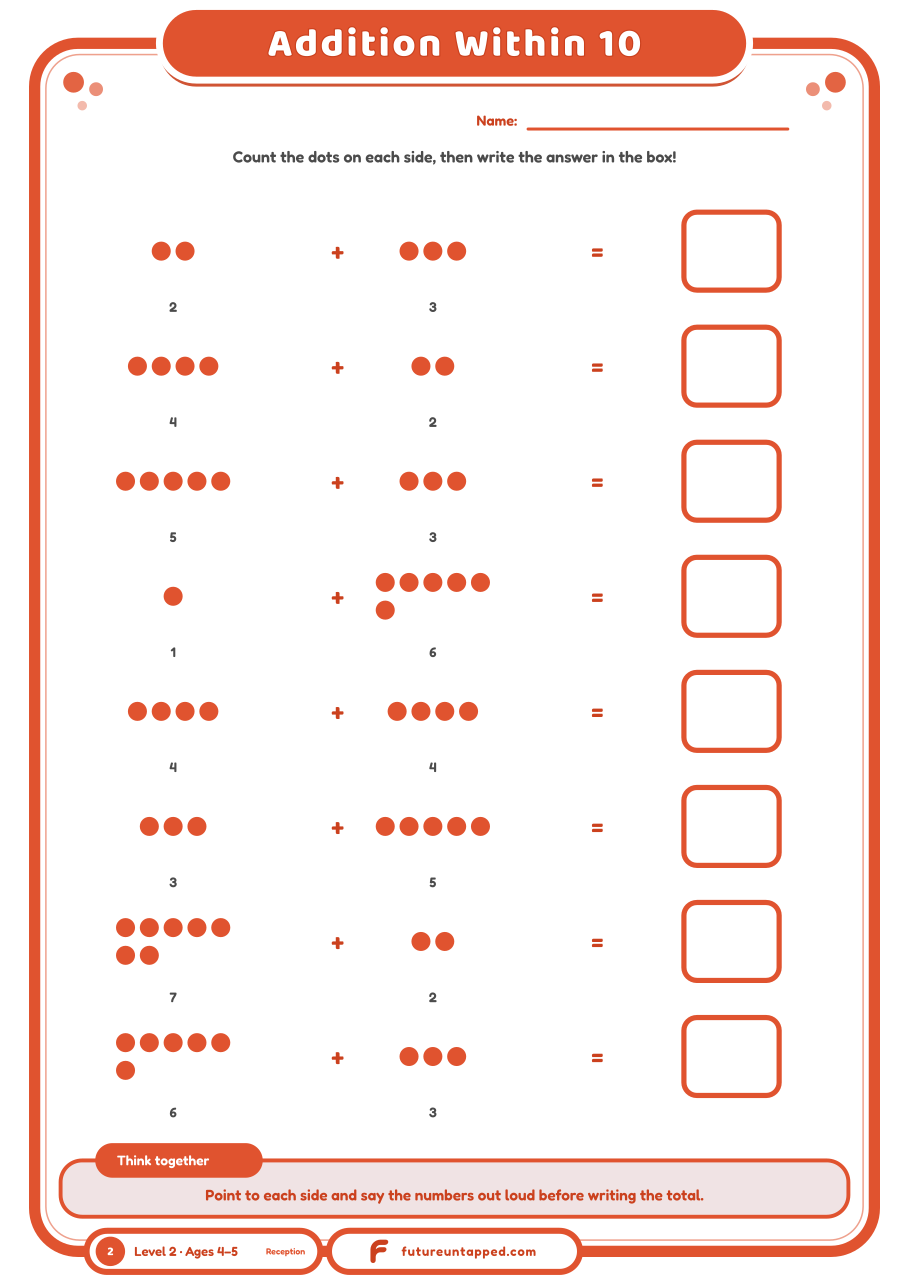
Addition Within 10 Quick Sheet
Ages 4-5, Pre-K/KAddition1 page, Letter and A4
- Free
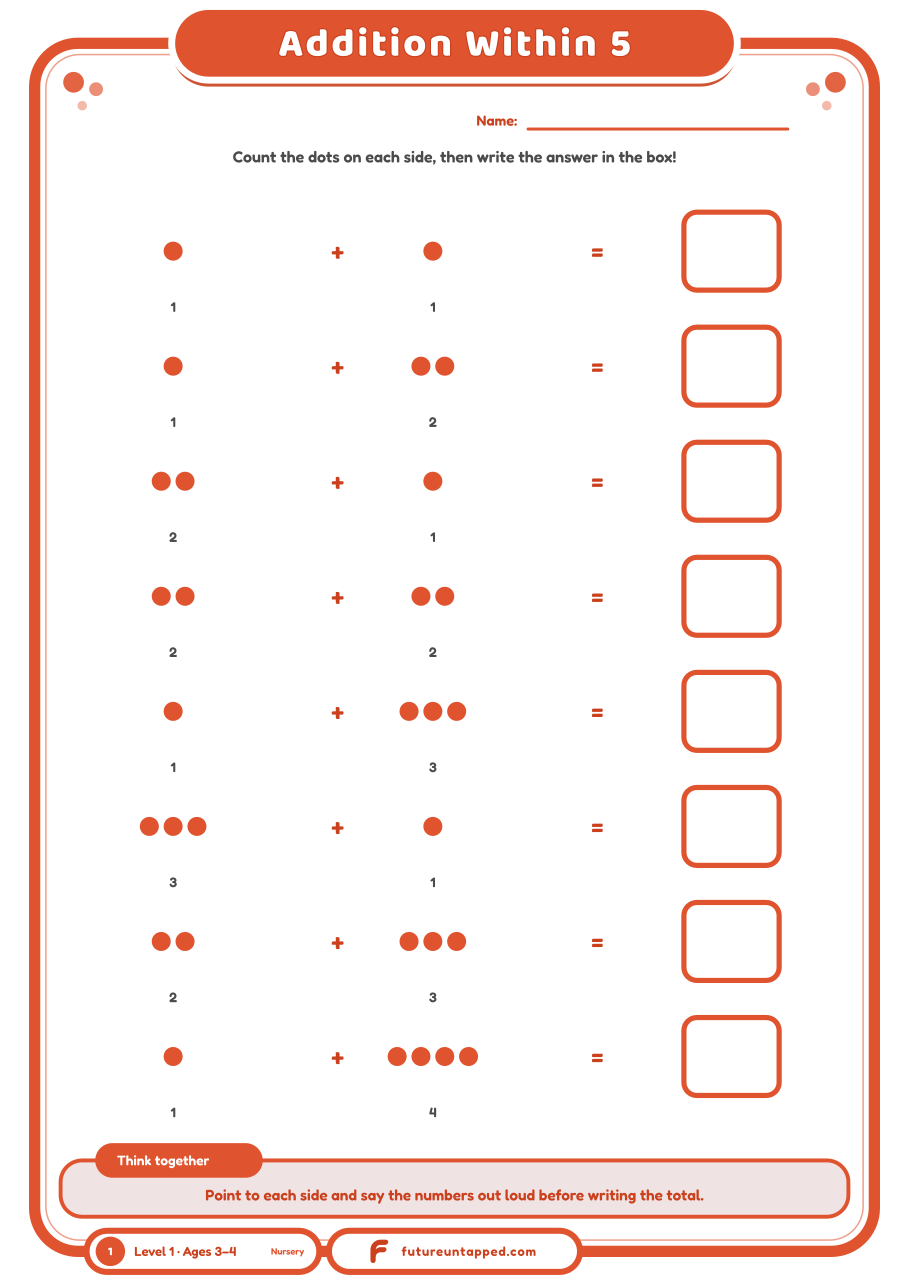
Addition Within 5 Quick Sheet
Ages 3-4, Pre-KAddition1 page, Letter and A4
- Free
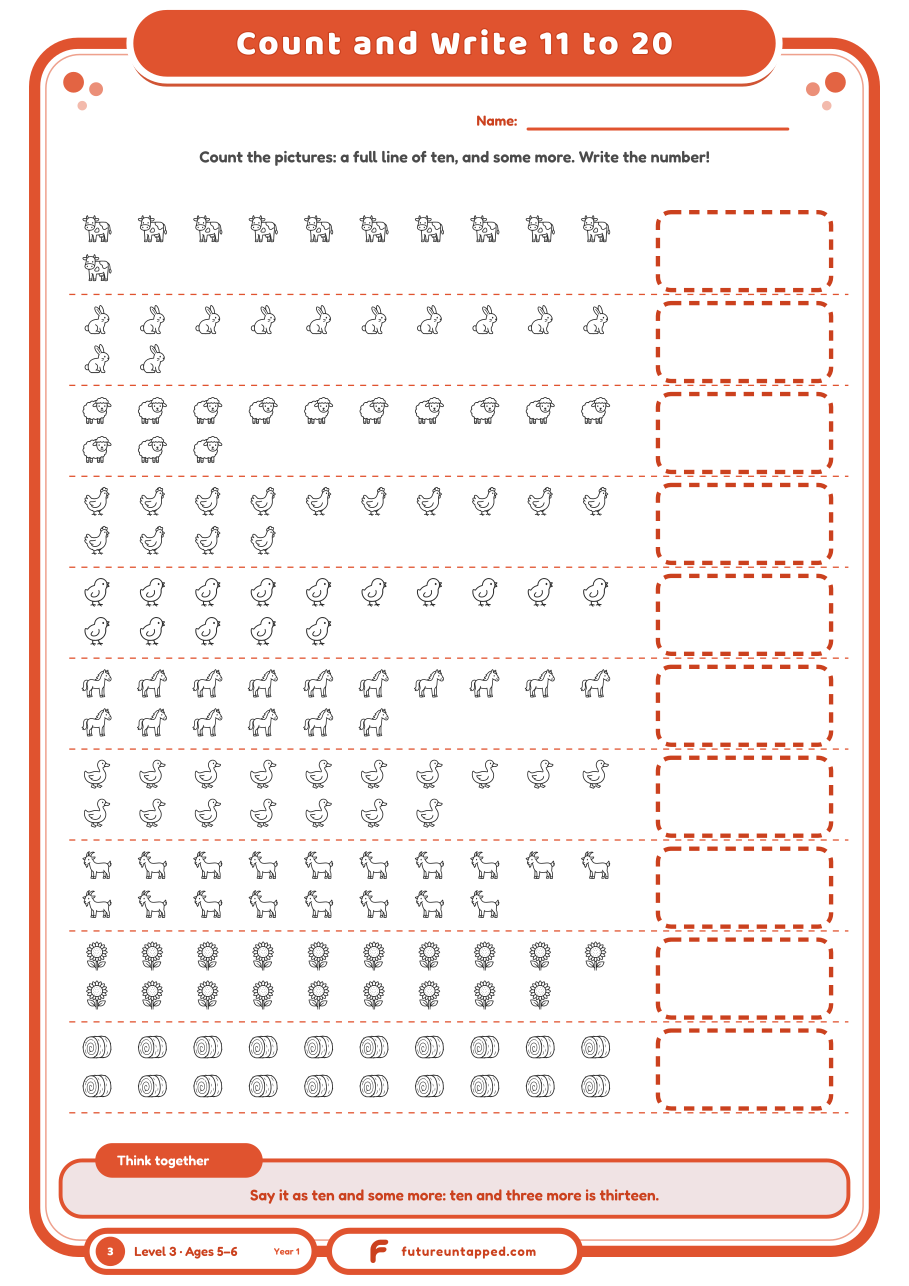
Count and Write Worksheet 11-20 for Kindergarten (Free Printable)
Ages 5-6, KCounting1 page, Letter and A4
- Free
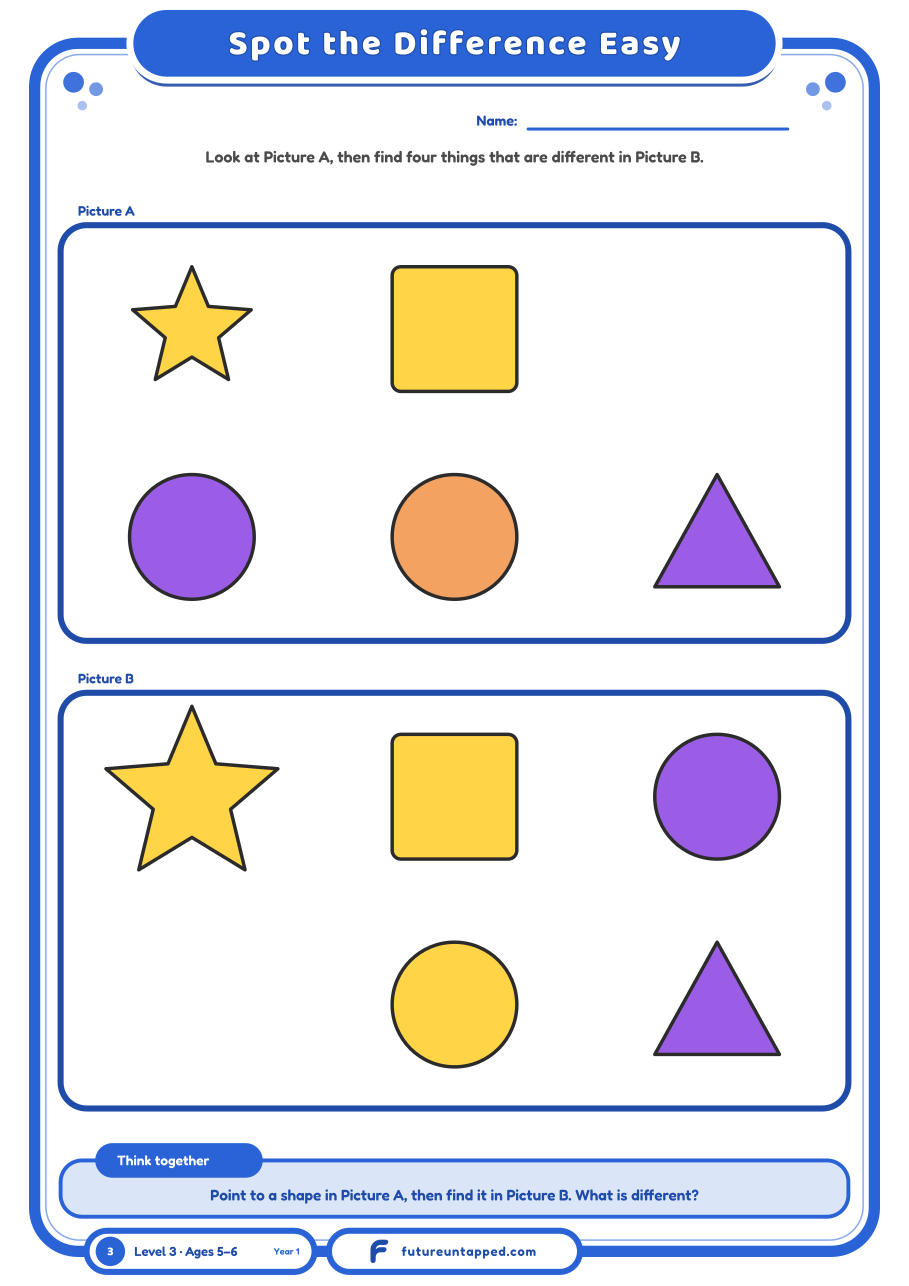
Spot the Difference Pictures with Answers: Easy, Medium and Hard (Free Printable)
Ages 5-6, KPuzzle6 pages, Letter and A4


