Free packAges 4-5, Pre-K/KPre-writing
Shape Tracing & Pre-Writing Lines
Trace six shapes and four pre-writing line patterns — free with email.
How to use this
What it builds
Shape tracing and pre-writing lines look like separate skills but share the same underlying demand: controlling a pencil along a path that isn't a letter yet. The six shapes (circle, square, triangle, rectangle, star, heart) build the curved and straight-edge control that letters like 'o', 'c', and 'l' will need later, while the four pre-writing line patterns (straight, curved, zigzag, loops) are the exact stroke families occupational therapists use to check pencil readiness before formal handwriting instruction starts. Bundling both into one pack matches how preschool fine-motor centers usually run — shapes and lines together, before any letter is introduced — rather than treating pre-writing as a separate, optional add-on. Six shapes and four line families in one bundle also means a single print run covers a whole week of five-minute fine-motor warm-ups without repeating the same page twice.
Ready when
Any preschooler holding a crayon or fat pencil, even inconsistently, can start here — this pack asks for less letter-specific control than alphabet tracing, since shapes and lines are more forgiving than a recognizable letterform. It's a reasonable page to hand a child before starting alphabet tracing at all, not just alongside it. There's no strict order shapes and lines have to be introduced in beyond the straight-before-curved guidance above — follow whichever a specific child finds more engaging on a given day.
How to run it
Print the pages you need, or the full pack. Start with the straight lines and simple shapes (square, triangle) before the curved ones (circle, heart) — straight paths are consistently easier for a first-timer than curved ones. Five to ten minutes covers several pages. Free for classroom use, and a natural fit for a fine-motor center that rotates with cutting practice and alphabet tracing rather than replacing either. Once shapes and lines feel steady, alphabet tracing is the natural next step, since it asks for the same pencil control applied to recognizable letterforms instead of geometric ones. After the page is finished, ask a child to find the shapes again in the room around them — a window, a book, a wheel — which turns a tracing exercise into a shape-recognition game and reinforces that these aren't just marks on paper but real forms they already see every day. Printing several copies at once and keeping them in a folder by the kitchen table means the activity is ready the moment a spare five minutes shows up, rather than needing to be found and printed on demand.
More like this
- Free
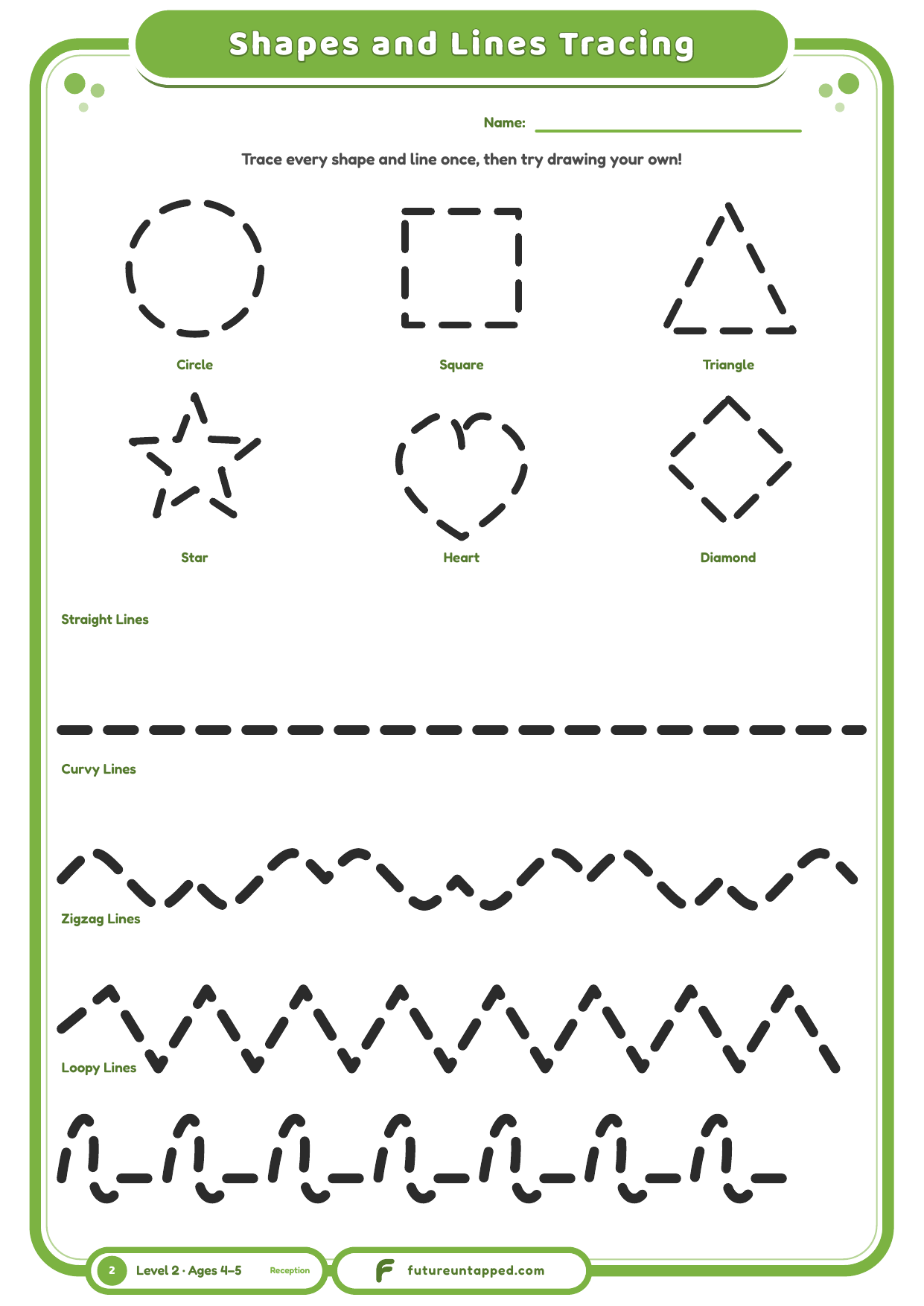
Shapes and Lines Tracing Quick Sheet
Ages 4-5, Pre-K/KPre-writingLetter and A4
- Free
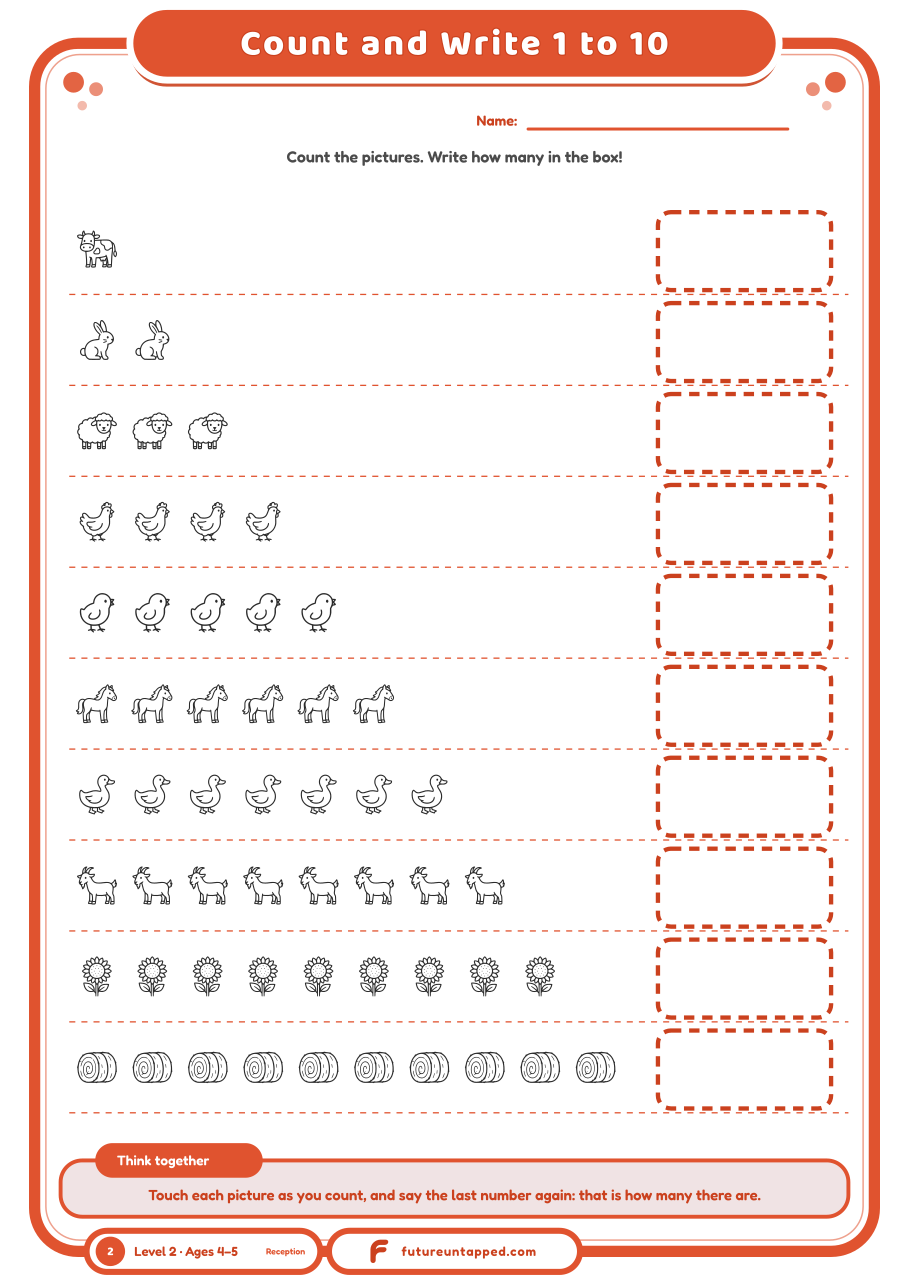
Count and Write Worksheet 1-10 for Kindergarten (Free Printable)
Ages 4-5, Pre-K/KCounting1 page, Letter and A4
- Free
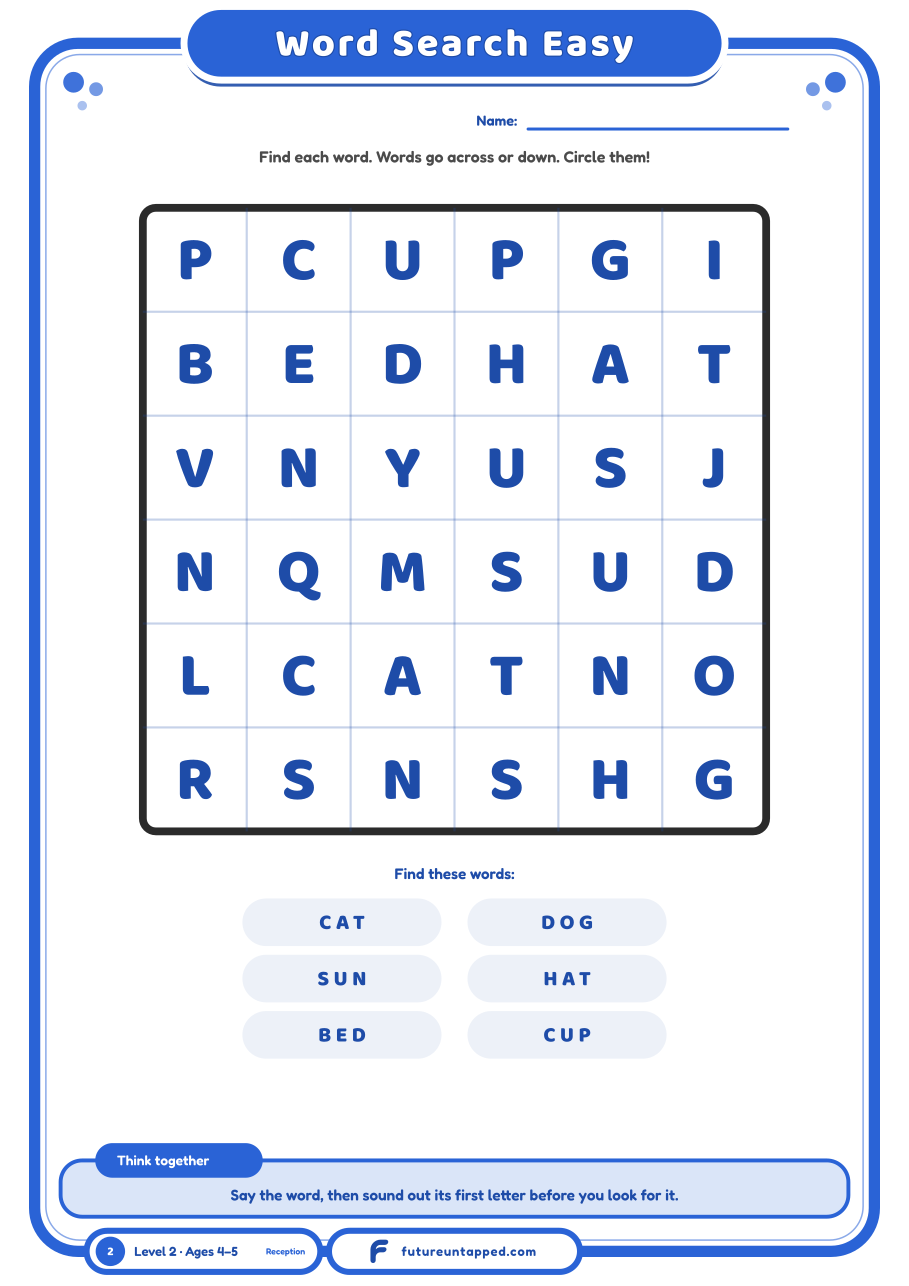
Easy Word Search for Kids, Ages 5-6 (Free Printable)
Ages 4-5, Pre-K/KPuzzle1 page, Letter and A4
- Free with email
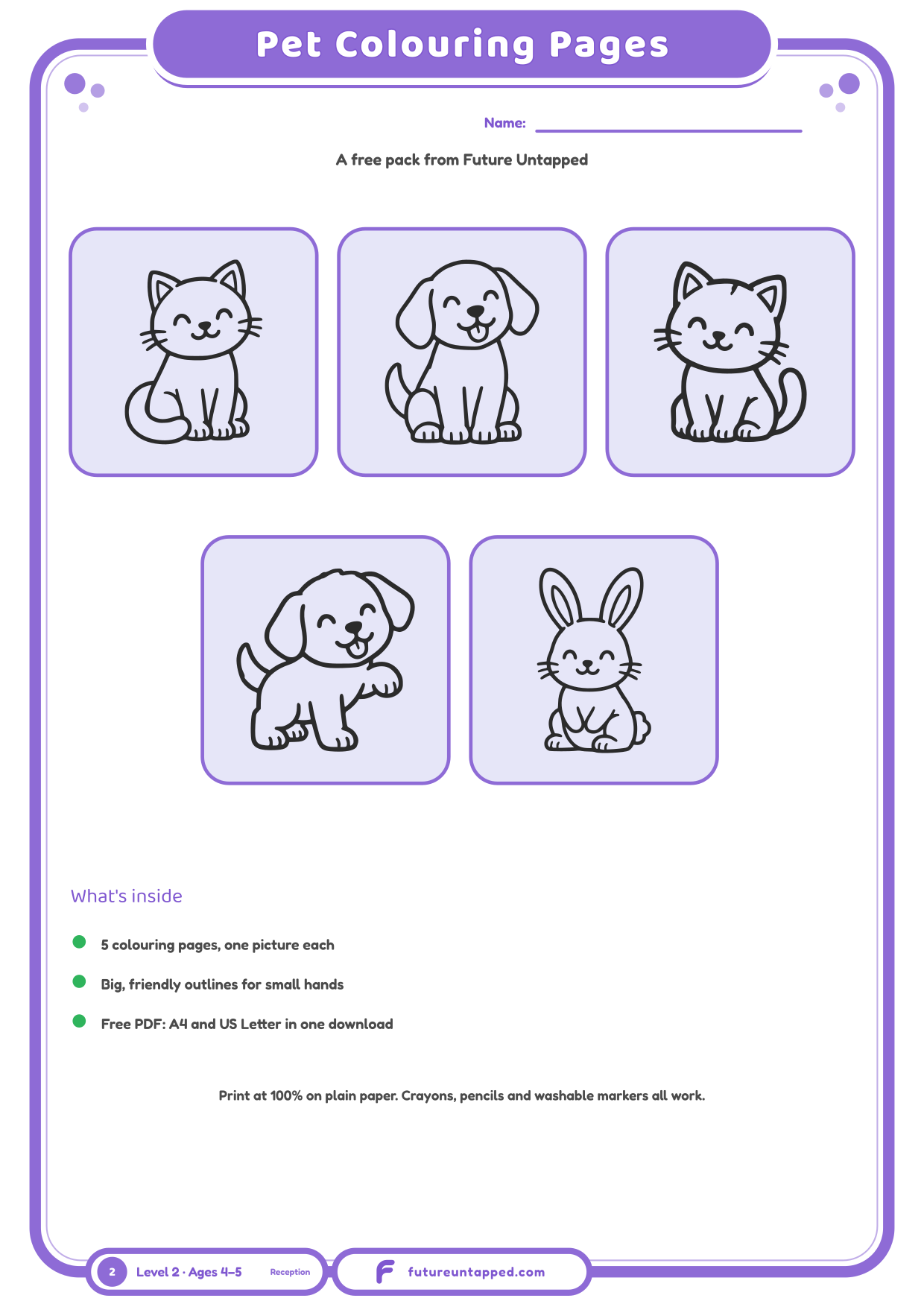
Pet Coloring Pages
Ages 4-5, Pre-K/KColoringPets, 6 pages, Letter and A4


