Free packAges 3-4, Pre-KPatterns
Patterns: What Comes Next?
Spot the repeating pattern and circle what comes next — AB, AAB, ABB and ABC patterns — free with email.
How to use this
What it builds
Spotting and extending a repeating pattern is one of the first real pieces of logical reasoning a young child does, and it's the direct entry point to algebraic thinking years before algebra has a name. This 8-page book walks through all four pattern types a preschool or kindergarten curriculum typically covers, in order of difficulty: AB (the simplest two-element repeat), AAB and ABB (the same two elements with a repetition inside the unit, mirror images of each other in difficulty), and ABC (a three-element unit that needs more working memory to hold in mind). Each page keeps the task to two deliberately paced looks — one quick pattern to find the rule, then a longer, harder one that needs a real second look — with a 'Say' prompt between them asking the child to name what comes next out loud, and a 'Reflect' prompt after asking how they knew (junior/docs/12-learning-blueprint.md). Every row uses a different pair or trio of icons, so a child has to read the underlying structure of the pattern rather than memorize which specific pictures went together — a page that reused the same icons throughout would let a child guess correctly without ever reasoning about the pattern at all.
Ready when
A child who can name and sort objects by one shared feature — color, shape, or kind — is ready to start spotting a pattern in a row of them. They do not need to know the terms 'AB' or 'pattern unit'; noticing and continuing the repeat is the whole skill, the vocabulary can come later.
How to run it
Work through the four pattern types in the order they're presented — AB, then AAB and ABB, then ABC — rather than jumping around, since each step assumes the previous one is comfortable. On each page, do the first pattern together and ask 'what comes next?' before revealing the answer; then let them try the longer one on their own and ask 'how did you know?' afterward instead of just marking it right or wrong. Circle one face in the corner log for how the page went — that's the cue for whether to repeat a type or move to the next one. Two to four minutes per page covers the book across a few short sessions rather than one long one. Free for classroom use, and each pattern type is also available as its own single-page quick sheet in the same library for a faster, more targeted practice session on just the type a child needs. If AAB and ABB get mixed up, that's a normal and expected confusion at this stage — they use the same two elements with only the position of the repeat swapped, and most children need to see a few examples of each side by side before the distinction settles in.
More like this
- Free
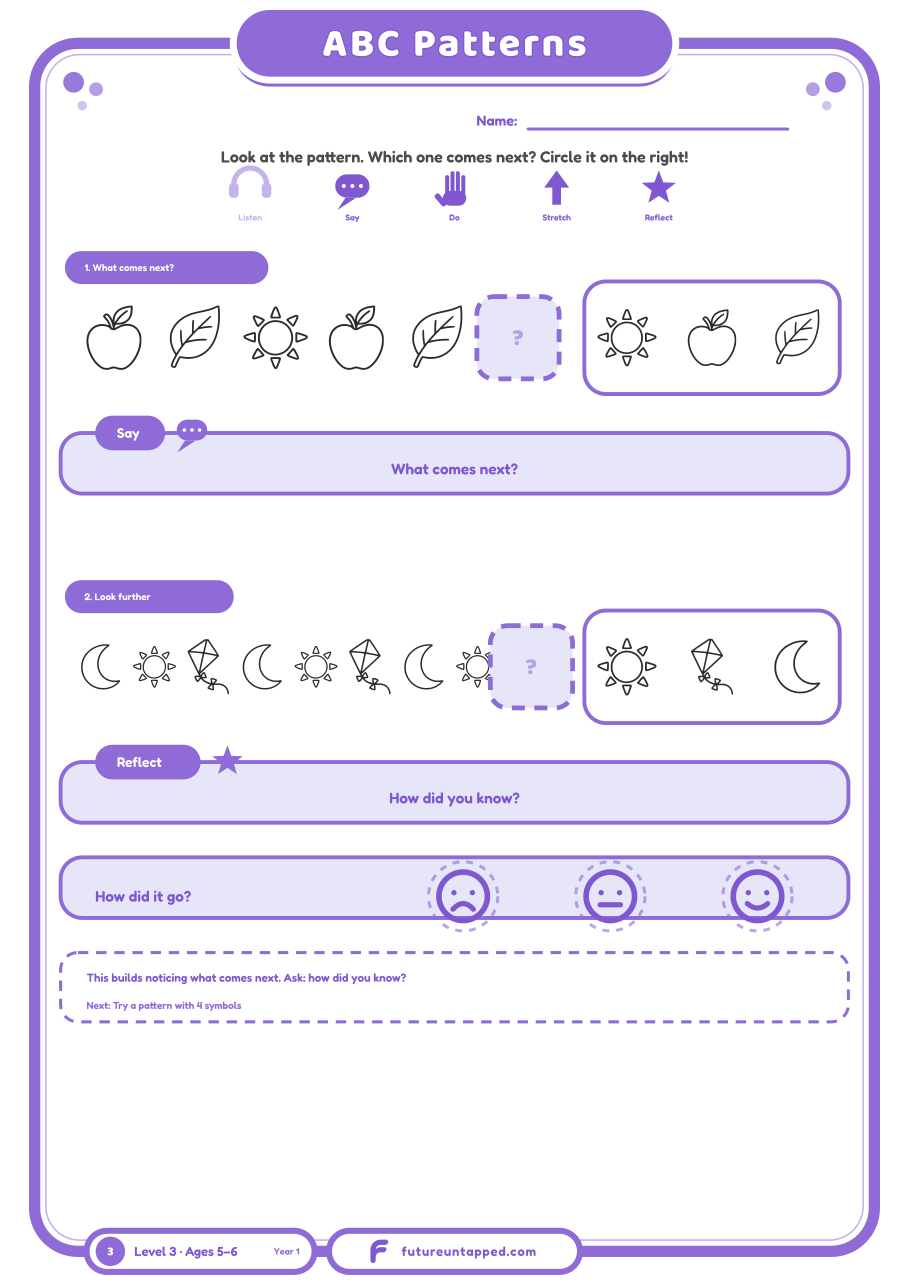
ABC Pattern Worksheet for Preschool (Free Printable)
Ages 5-6, KPatterns1 page, Letter and A4
- Free
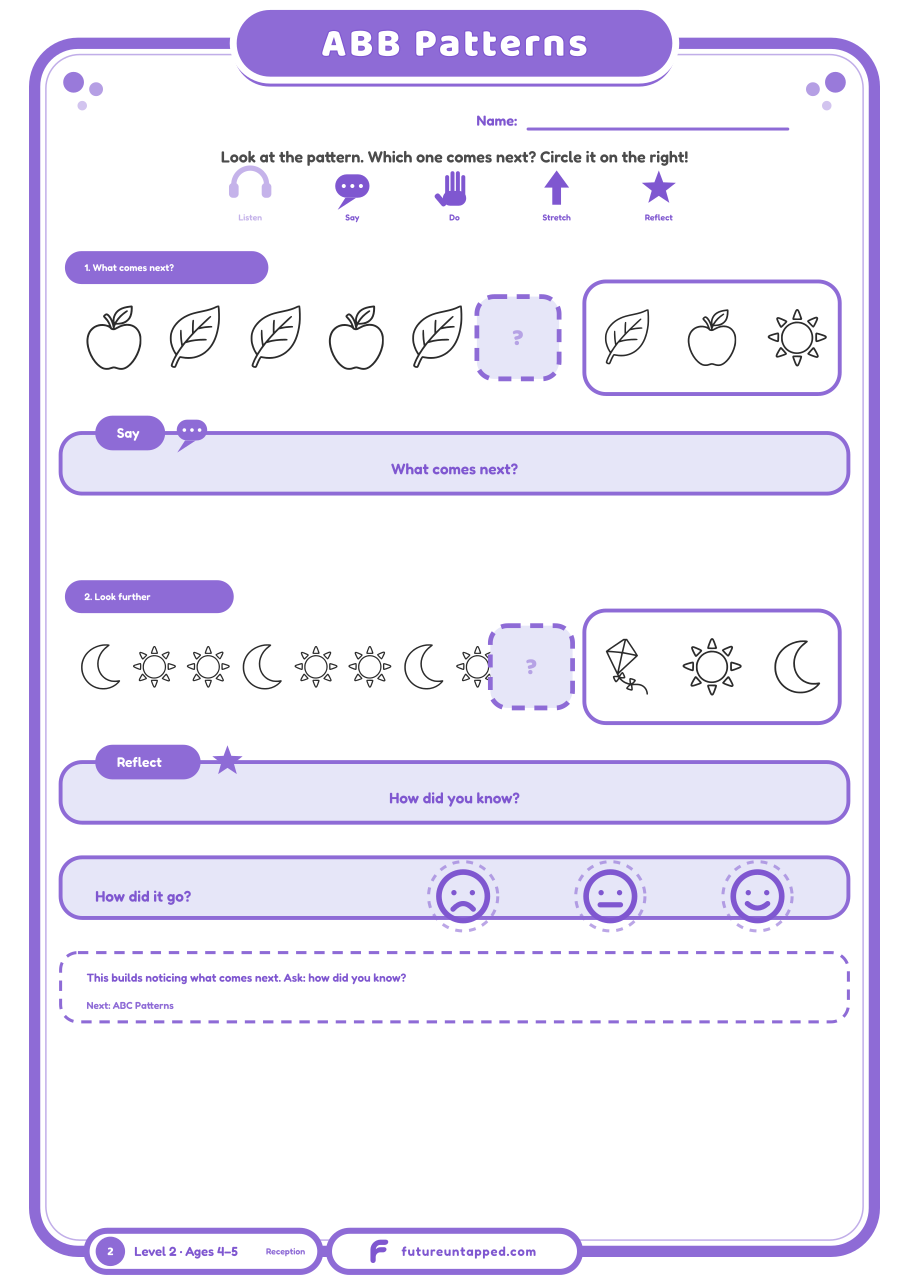
ABB Pattern Worksheet for Preschool (Free Printable)
Ages 4-5, Pre-K/KPatterns1 page, Letter and A4
- Free
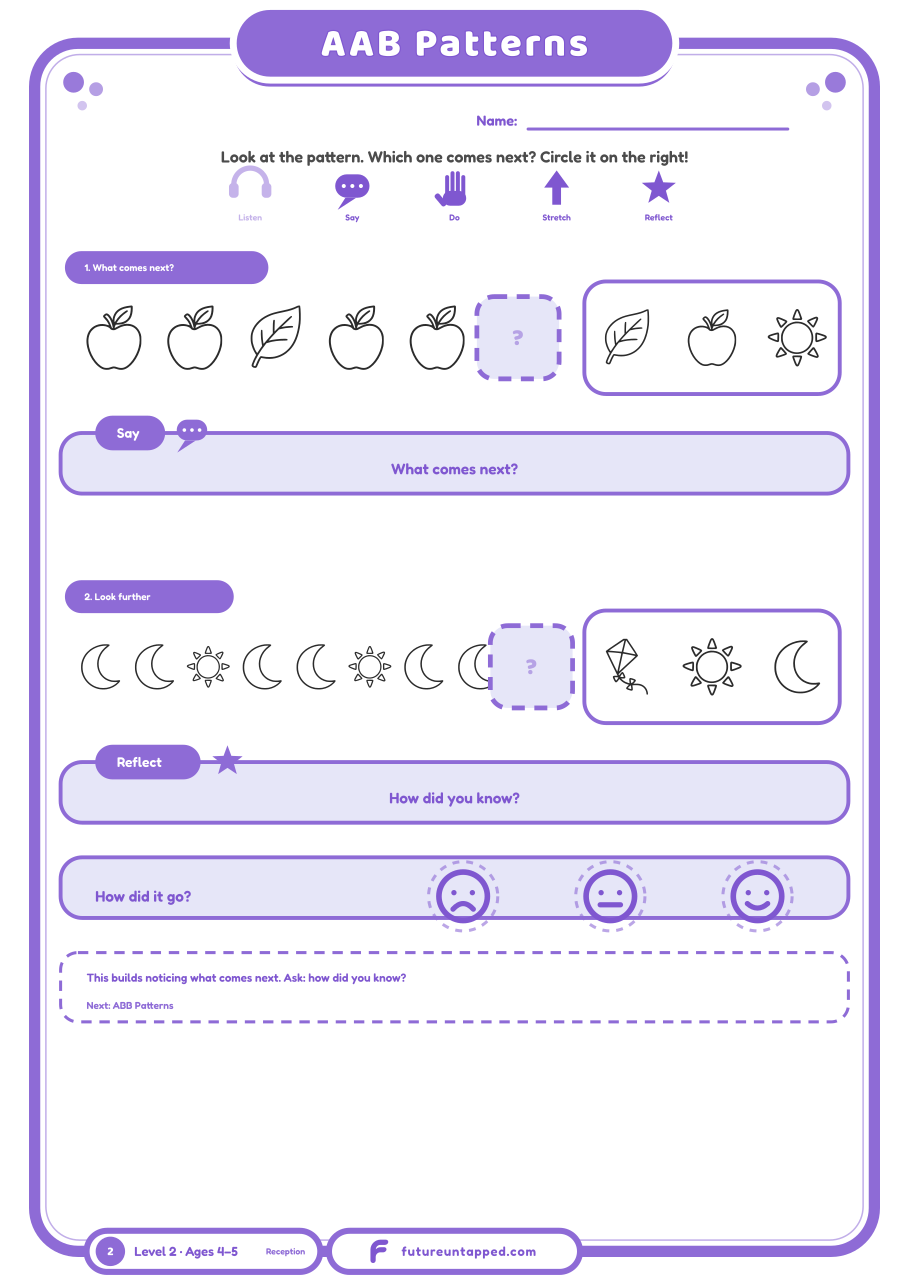
AAB Pattern Worksheet for Preschool (Free Printable)
Ages 4-5, Pre-K/KPatterns1 page, Letter and A4
- Free
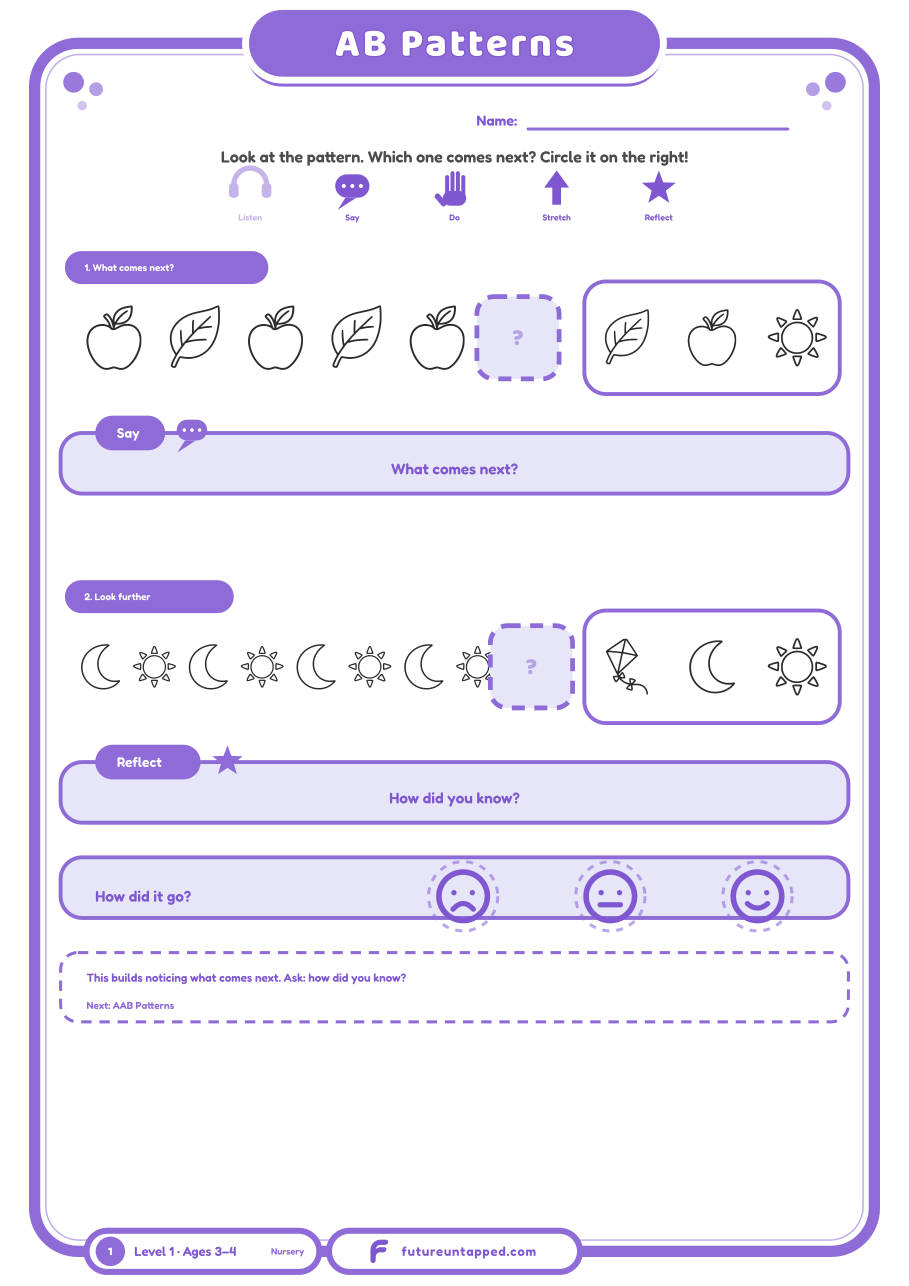
AB Pattern Worksheet for Preschool (Free Printable)
Ages 3-4, Pre-KPatterns1 page, Letter and A4


