Free printableAges 3-4, Pre-KMatching
Same or Different Matching Quick Sheet
One free page: look at each farm pair and circle same or different.
Step 2 of 4 on the matching path
Print & download
Same or Different Matching Quick Sheet (1 page)
Free to print and use at home or in the classroom, as many times as you like.
How to use this
What it builds
Same-or-different is the most basic visual-discrimination judgment a preschooler makes, and it underlies far more than matching games: noticing that 'b' and 'd' are different, or that two spellings of a word are the same, both rest on the same skill of holding two images side by side and comparing them feature by feature. This page keeps the task to two deliberately paced looks instead of a long grid: an easy pair (cow/horse) to learn the move, then a harder pair (two ducks, same shape, different size) that needs a real second look. A 'Say' prompt between them asks the child to name what's different out loud, not just circle an answer, and a 'Reflect' prompt afterward asks how they looked — turning a one-shot worksheet into the same noticing-and-explaining loop a resource-rich home runs automatically (junior/docs/12-learning-blueprint.md). Farm animals were chosen over abstract shapes deliberately — a real, recognizable subject gives a young child a reason to care about the comparison beyond the exercise itself.
Ready when
Any toddler who can point to a picture on request is ready to try this with an adult reading the words 'same' and 'different' aloud; a preschooler who already knows those words can work through it independently with a crayon. This is usually the very first matching task a child meets, well before shadow matching or count-and-match, since it needs no memory of a name or a number — just a direct side-by-side look.
How to run it
Print one page. Do the first pair together — ask 'what is different?' before revealing which word to circle. Then let them try the second, harder pair on their own; ask 'how did you look?' afterward instead of just marking it right or wrong. Two to three minutes covers the page. Circle one face in the corner log for how the session went — that's the cue for whether to repeat this level or move on to shadow matching next. Teachers can use it as a five-minute morning-tub task; laminate it and use a dry-erase marker for reuse across a whole class instead of printing one per child. If a child gets the second pair wrong, ask them to point out one specific difference before you correct it — naming out loud what they missed sticks better than just hearing the right answer, and it's the same habit that helps later with spot-the-difference puzzles and, eventually, proofreading their own writing. Homeschool families often slot this in right alongside a farm or animal unit, since the same pictures double as a vocabulary prompt for naming each animal before the matching task begins.
Step 2 of 4 on this skill path
- 1Same or Different Everyday Objects Quick Sheet
- 2Same or Different Matching Quick SheetAges 3-4, Pre-K
- 3Count and Match Worksheet for Preschool (Free Printable)
- 4Farm Shadow Matching Quick Sheet
More like this
- Free
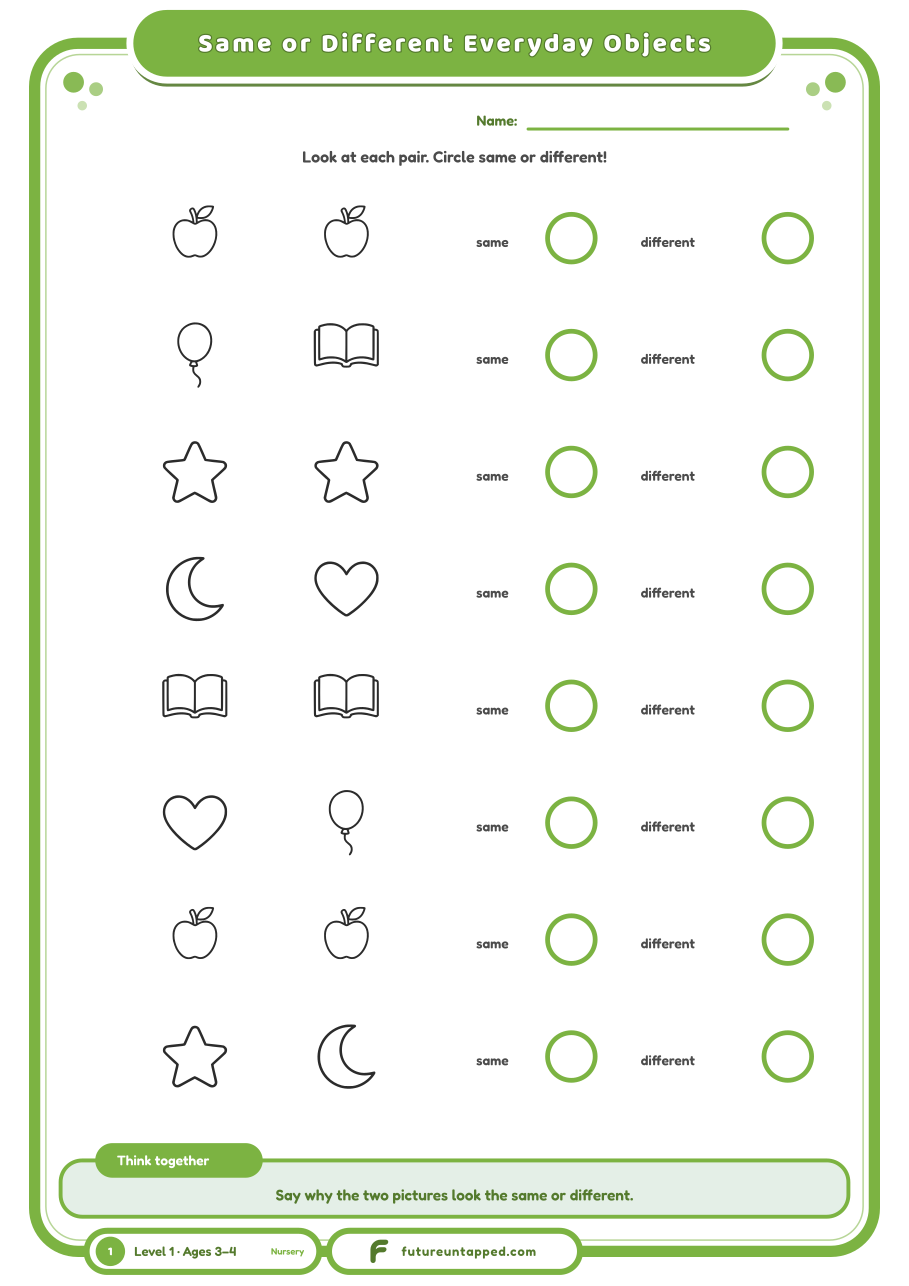
Same or Different Everyday Objects Quick Sheet
Ages 3-4, Pre-KMatchingDecor, 1 page, Letter and A4
- Free
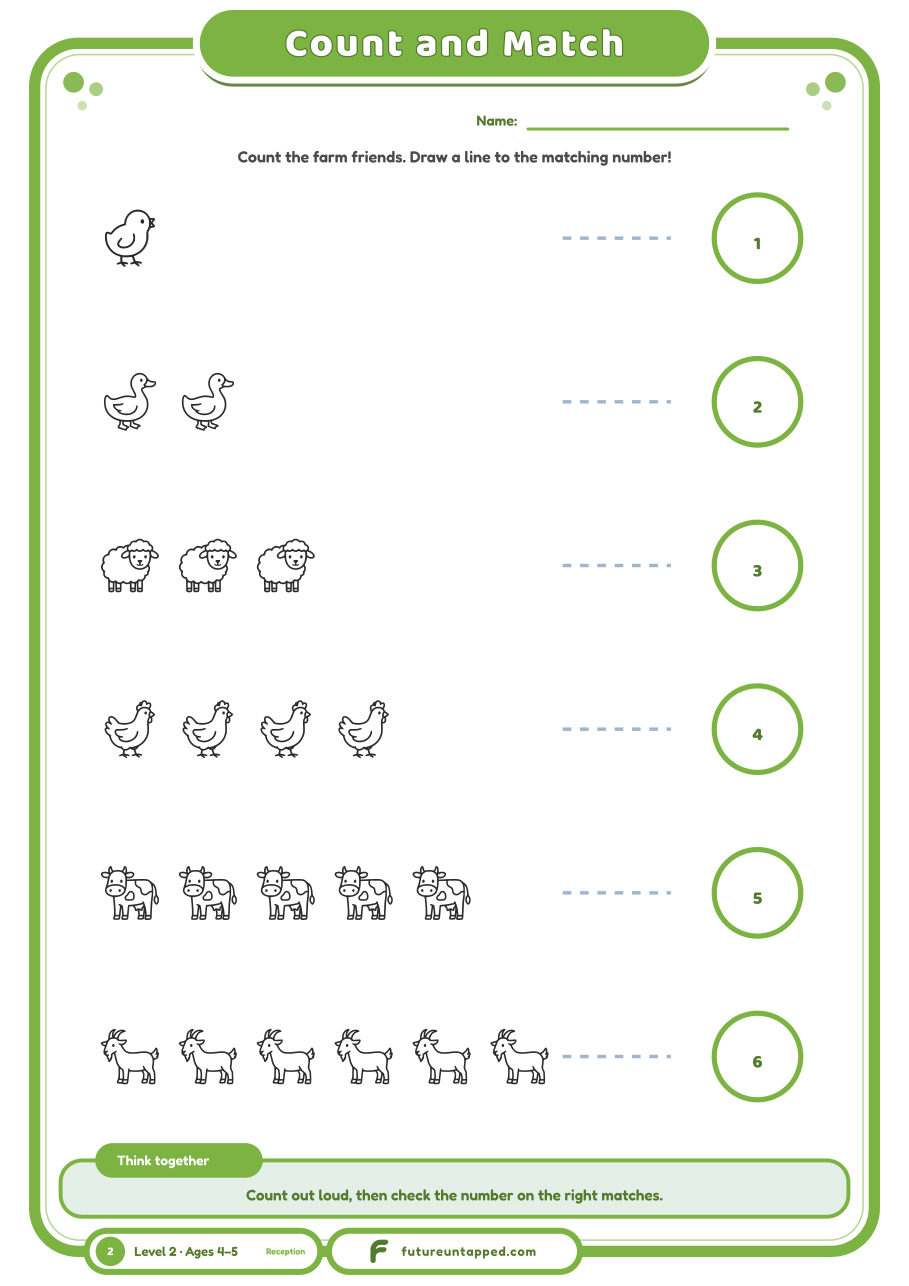
Count and Match Worksheet for Preschool (Free Printable)
Ages 4-5, Pre-K/KMatchingFarm, 1 page, Letter and A4
- Free
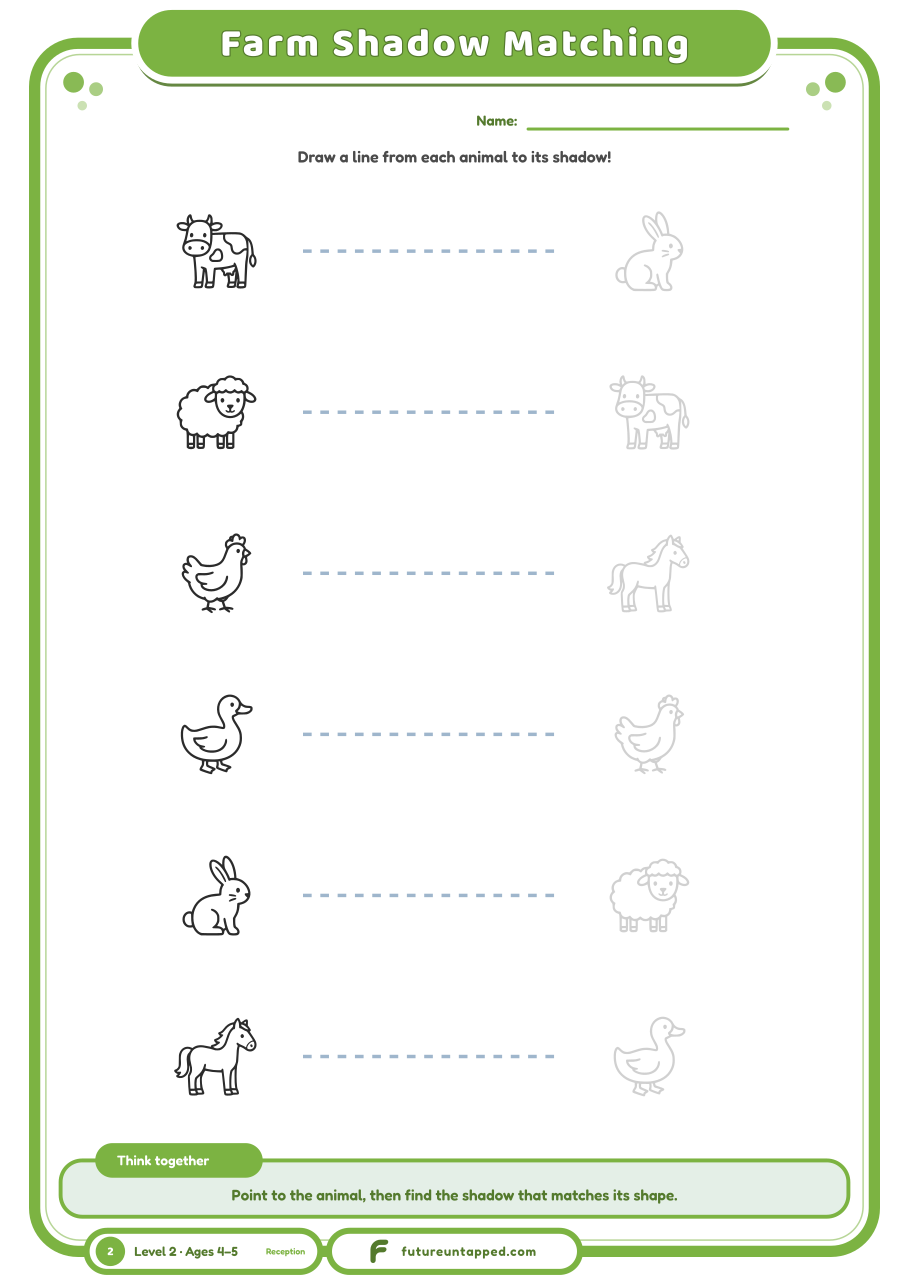
Farm Shadow Matching Quick Sheet
Ages 4-5, Pre-K/KMatchingFarm, 1 page, Letter and A4
- Free
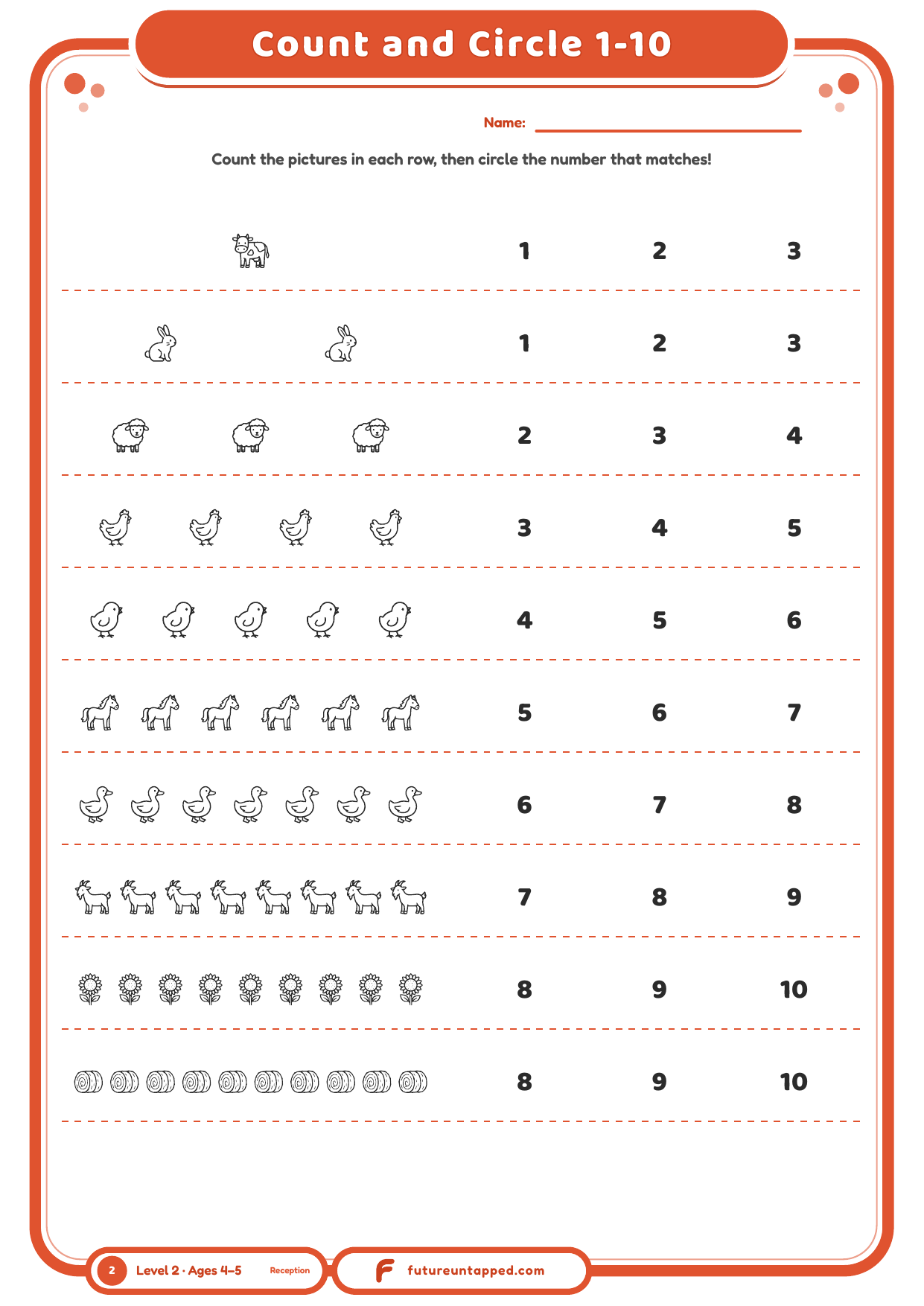
Count and Circle 1-10 Worksheet (Free Printable)
Ages 3-4, Pre-KCountingLetter and A4


